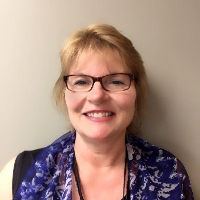
- Client-centered approach
- 15 years experience
- Works in English
About Diane
Diane trained with a Master of Social Work from the University of Kansas and holds social work licenses in Missouri and Kansas as LCSW and LSCSW. Much of her career has been in psychiatric settings, including work with seniors, hospice, veterans, and first responders. She has also supported members of the LGBTQ+ community.
Her style is client-centered. Diane aims to meet each person where they are and move at a pace that feels manageable. Sessions focus on listening first, then finding practical steps that align with the person's values and goals.
Diane uses several approaches based on what best fits the person and the concern. She draws on Cognitive Behavioral Therapy to address thought and behavior patterns, Emotionally-Focused Therapy to help with relational and attachment issues, and Mindfulness to build present-moment skills. Existential ideas are used when people are wrestling with meaning or life transitions.
People describe her as nonjudgmental, compassionate, and easy to talk with. She also believes that appropriate moments of humor can be part of healing. Diane invites those who are ready to begin a process of change to take the first step and complete the initial matching questionnaire.
Areas of expertise
Primary focus
Also works with
Additional focus areas
Therapeutic approaches
Experience
15+ years
Credentials
Missouri, Kansas
Languages
English
How Diane's approaches translate to online therapy
Diane often uses Client-Centered Therapy, which emphasizes listening, empathy, and working at a person's own pace. This approach helps when someone needs a calm space to tell their story and decide next steps.She also uses Cognitive Behavioral Therapy (CBT) to help identify unhelpful thoughts and try new behaviors. CBT is practical and goal-oriented, which can fit well into regular online sessions and short homework between meetings.
Finding the right approach is part of the work together. Diane will collaborate with the person to choose what matches their goals and preferences, and she will adjust methods as needed. The process is paced to what feels manageable for the client.
Session formats are not specified in the biography, so please confirm the available options before booking. Online therapy can make it easier to fit sessions into a busy life, reduce travel time, and allow for consistent check-ins. It also allows some sessions to be shorter or focused on skill practice when that is helpful.
Frequently asked questions
What kinds of concerns does Diane help with?
She supports people facing stress, anxiety, trauma and abuse, grief, depression, addictions, relationship and intimacy issues, self-esteem problems, ADHD, and many related concerns.
How would you describe her therapeutic style?
Diane practices a client-centered style that starts with listening and moves at your pace. She focuses on practical steps and uses empathy and humor where helpful.
What is her clinical background?
She holds a Master of Social Work from the University of Kansas and has about 15 years of experience in psychiatric settings, hospice, senior counseling, and work with veterans and first responders.
What credentials and location are listed for Diane?
She is listed as LCSW and LSCSW with practice ties to Kansas and a license in Missouri noted in her background.
Which languages are supported for sessions?
Sessions are offered in English.
Can people outside the country work with her?
International clients are not currently accepted.
How is cost handled for sessions?
Cost varies with location and therapist availability; sessions use a subscription that can be canceled at any time.
What are the steps to begin working together?
Click the Start Therapy button, complete a short matching questionnaire, and schedule according to the therapist's availability.
Before you get in touch
Therapists listed here offer talking therapy online. A profile is not a diagnosis of you or of anyone in your life, and no therapist can promise how a relationship will turn out.
If you are in danger, or someone is hurting or threatening you, contact emergency services or a domestic-abuse helpline. The numbers are at the foot of this page.